Matcha vs. Coffee: Which Has More Caffeine?
The morning routine for millions of people worldwide centers around a single vital ritual: securing a clean, reliable boost of morning energy. For decades, traditional espresso and drip coffee held an undisputed monopoly over daily caffeine intake. However, the meteoric rise of shade-grown Japanese green tea powder has introduced a compelling alternative. When evaluating matcha vs coffee caffeine content, the choice extends far beyond raw milligrams of energy it directly impacts how your body processes alertness throughout the day.
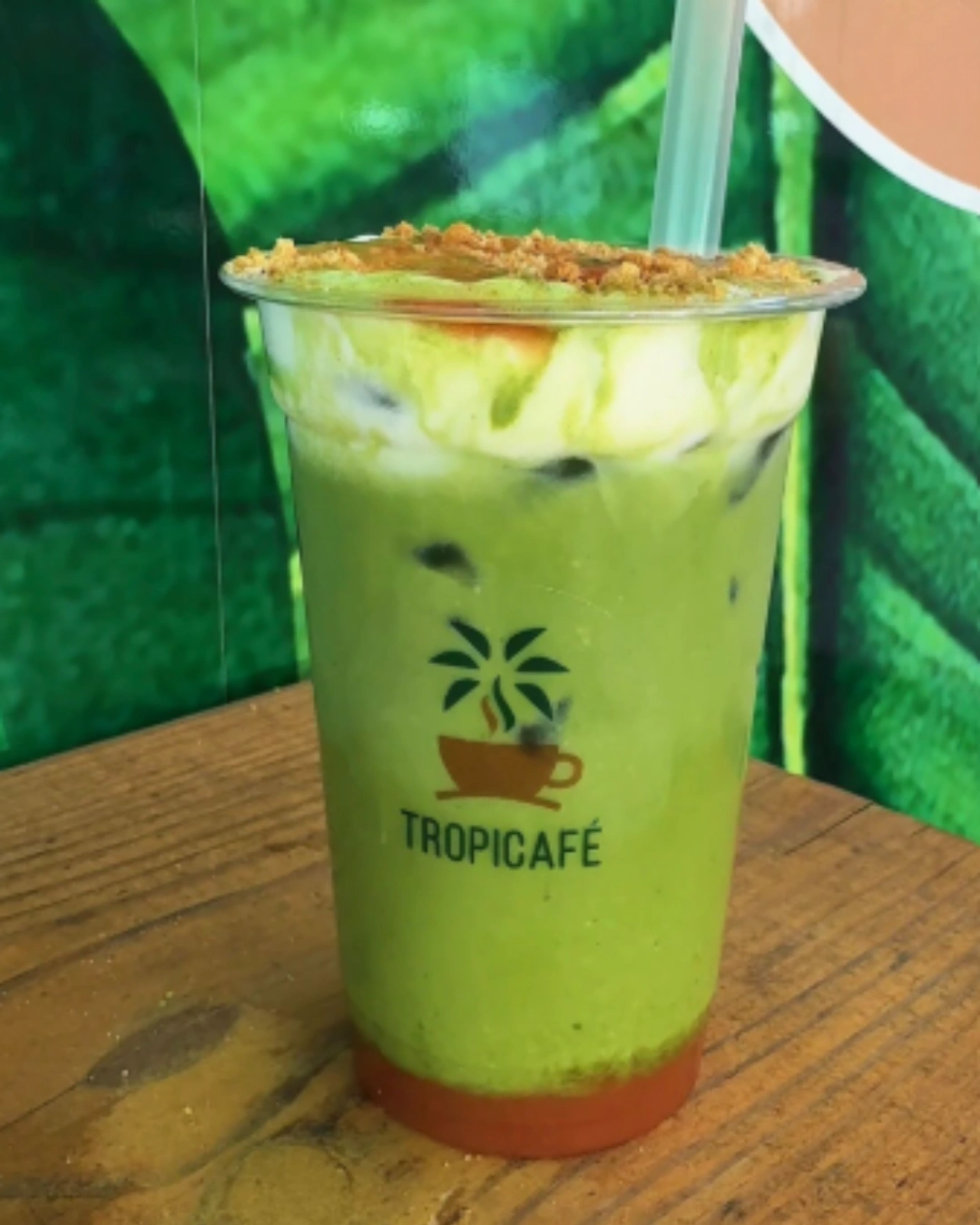
At TropiCafé, we craft both high-end espresso preparations and ceremonial-grade matcha lattes. Understanding the biological mechanisms, energy curves, and functional differences between these popular beverages empowers you to choose the perfect cup for your lifestyle.

Direct Overview: Energy Profile Breakdown
For an immediate side-by-side comparison, the breakdown below outlines how key stimulant metrics differ across standard serving sizes:
| Energy Metric | Ceremonial Matcha (1 TSP / 2 oz) | Drip Coffee (8 oz Cup) | Espresso (Single Shot / 1 oz) |
| Average Caffeine Content | 35 – 70 mg | 95 – 140 mg | 63 – 75 mg |
| L-Theanine Level | High (20 – 40 mg) | None (0 mg) | None (0 mg) |
| Onset of Alertness | Gradual (15 – 30 Minutes) | Rapid (5 – 10 Minutes) | Instantaneous |
| Energy Duration | 4 – 6 Hours (Sustained) | 1 – 3 Hours (Spiked) | 1 – 2 Hours (Brief) |
| Post-Caffeine Crash Risk | Very Low | Moderate to High | Moderate |
Analyzing Matcha vs Coffee Caffeine Concentrations
Comparing raw caffeine numbers alone does not tell the full story. Serving sizes, brewing methods, and agricultural factors heavily influence how much caffeine actually reaches your cup.
Caffeine Delivery Profile:
[Coffee Extraction] ➔ Rapid Systemic Absorption ➔ Sharp Energy Peak ➔ Potential Afternoon Crash
[Matcha Consumption] ➔ L-Theanine Binding ➔ Sustained Sustained Release ➔ Smooth Metabolic Return
Coffee: Rapid Absorption and High Volume
A standard 8-ounce cup of brewed drip coffee delivers between 95 mg and 140 mg of caffeine. Because coffee beans are steeped and strained, the liquid contains concentrated caffeine alkaloids that absorb rapidly through the stomach lining. This produces a swift rise in central nervous system stimulation, delivering an almost immediate surge of wakefulness.
Matcha: Concentrated Whole-Leaf Nutrition
Unlike traditional steeped green tea where leaves are removed before drinking matcha consists of whole green tea leaves ground into a microscopic powder. When you consume a matcha latte or traditional whisked bowl, you ingest the entire tea leaf.
A standard serving (approximately 1 teaspoon of ceremonial powder) contains roughly 35 mg to 70 mg of caffeine. While this raw number is lower than a standard mug of brewed coffee, it delivers significantly higher stimulation than standard bagged green tea.
The Secret Weapon: L-Theanine and the “Clean Energy” Curve
The most fundamental distinction in the matcha vs coffee caffeine debate lies in a unique amino acid called L-Theanine.
Matcha tea plants are shade-grown for several weeks prior to harvest. This shading process ramps up chlorophyll production and preserves high concentrations of L-Theanine. When consumed alongside caffeine, L-Theanine alters how the human brain processes stimulation:
- Alpha Brain Waves: L-Theanine promotes the generation of alpha brain waves, which are associated with a state of relaxed alertness and deep focus.
- Delayed Caffeine Release: L-Theanine binds to caffeine molecules, slowing their absorption into the bloodstream over a 4-to-6-hour window.
- Jitter Prevention: By moderating the adrenaline response triggered by caffeine, L-Theanine eliminates the rapid heart rate spikes and nervous jitters frequently linked to quick coffee consumption.
As noted in clinical reviews published by the National Institutes of Health (NIH), the synergistic combination of L-Theanine and caffeine significantly enhances cognitive performance, attention span, and task-switching ability without inducing anxiety.
Health Benefits Beyond the Energy Boost
Both beverages provide impressive nutritional profiles, but their secondary benefits support wellness in distinctly different ways.
Nutritional Spectrum:
[Matcha Powder] ➔ High EGCG Catechins + Fiber + L-Theanine + Chlorophyll
[Coffee Beans] ➔ Hydroxycinnamic Acids + Potassium + Chlorogenic Acid
Antioxidants: EGCG vs. Chlorogenic Acid
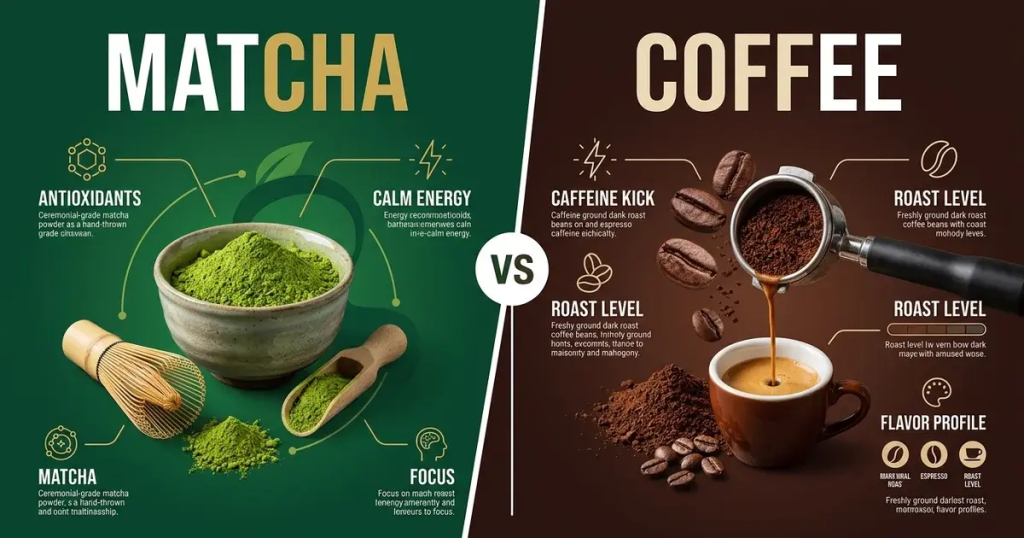
Matcha is exceptionally rich in epigallocatechin gallate (EGCG), a potent catechin antioxidant studied for its cell-protecting, anti-inflammatory, and metabolic properties. Coffee, on the other hand, stands as one of the largest dietary sources of chlorogenic acid, which supports insulin sensitivity and vascular health.
Acidity and Digestive Impact
Coffee is inherently acidic, with a typical pH value ranging between 4.8 and 5.1. For individuals with sensitive stomach linings, acid reflux, or irritable digestive systems, drinking black coffee on an empty stomach can trigger discomfort.
Matcha holds an alkaline-forming profile that is significantly gentler on digestive tracts, making it an excellent alternative for those seeking heartburn-friendly morning energy.
Which Should You Choose for Your Routine?
Deciding between these two classic beverages comes down to matching your personal physiology and daily scheduling demands:
- Choose Coffee If: You need immediate, high-potency alertness for early physical workouts, love rich roasted flavor notes, or require maximum caffeine per ounce.
- Choose Matcha If: You struggle with caffeine-induced jitters, need sustained cognitive focus for long work sessions, prefer alkaline digestive options, or love creamy, botanical flavor profiles.
At TropiCafé, our menu offers expertly pulled espresso drinks alongside shade-grown matcha lattes, allowing you to tailor your daily caffeine choice precisely to your body’s needs.